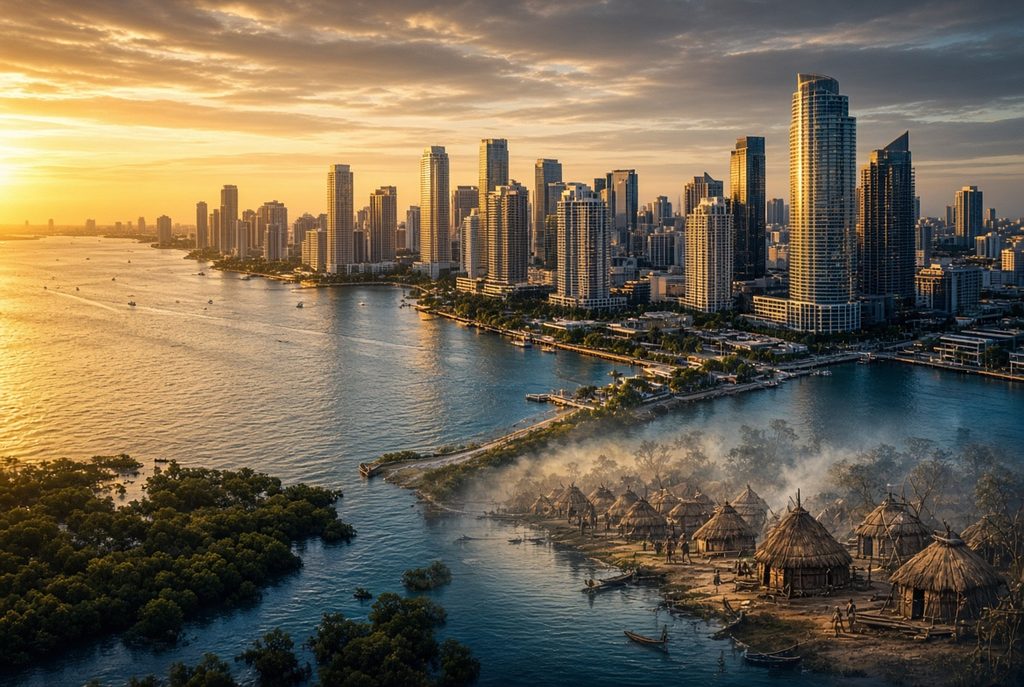
History of Miami
From Tequesta Village to Magic City
A city younger than the Brooklyn Bridge, built on thousands of years of history, ambition, and reinvention.
Before Miami
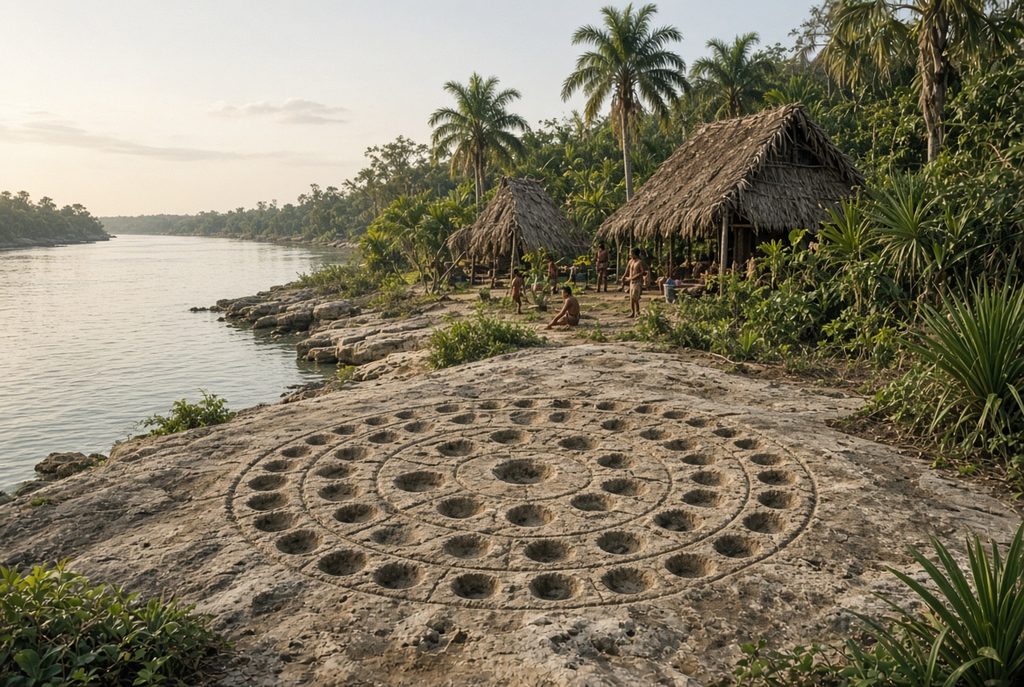
The Tequesta and the Miami Circle
Long before skyscrapers and Art Deco hotels, the mouth of the Miami River was home to the Tequesta people. For more than 2,000 years they lived, fished, and built along Biscayne Bay. In 1998, construction workers discovered the Miami Circle — a perfect prehistoric structure carved into the limestone bedrock. It remains one of the most important archaeological finds in Florida and a powerful reminder that Miami’s story did not begin in 1896.
The Founder
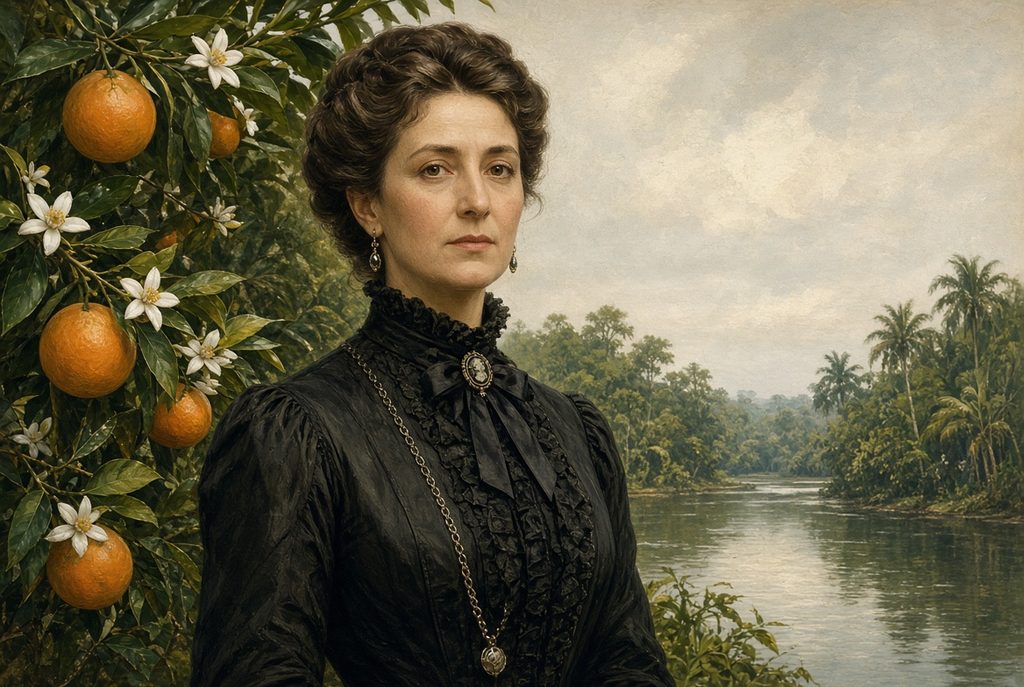
The Only Major U.S. City Founded by a Woman
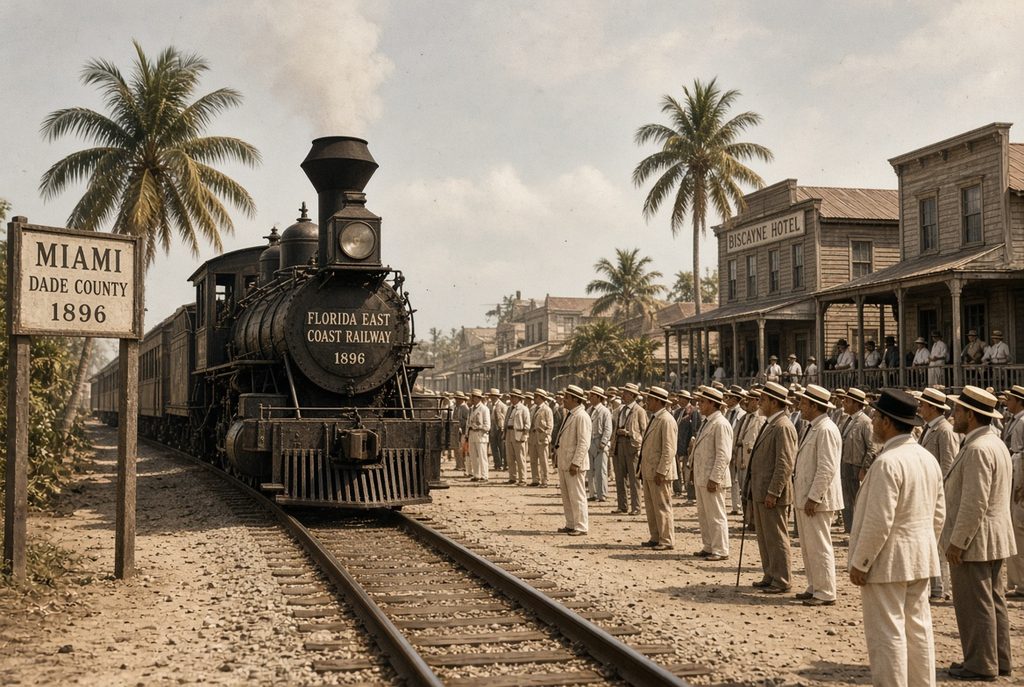
Julia Tuttle, a widowed businesswoman from Cleveland, bought 640 acres on the north bank of the Miami River in 1891. When the Great Freeze of 1894–95 destroyed citrus crops across Florida, Miami’s trees survived. Tuttle famously sent Henry Flagler fresh orange blossoms as proof. Flagler extended his Florida East Coast Railway south. On April 13, 1896 the first train arrived. On July 28, 1896 the City of Miami was officially incorporated. Residents wanted to name it “Flagler.” He refused. The city kept the ancient indigenous name: Miami.
1896
The Birth of the Magic City
Within months of the railroad’s arrival, a city rose from the pine woods and mangrove edges. Flagler built the Royal Palm Hotel, streets, waterworks, and power systems. Black laborers made up a significant portion of the early workforce and voters at the incorporation meeting. Miami grew so fast that people began calling it the “Magic City” — a place that seemed to appear almost overnight.
1920s – 1930s
Boom, Hurricane, and the Rise of Art Deco
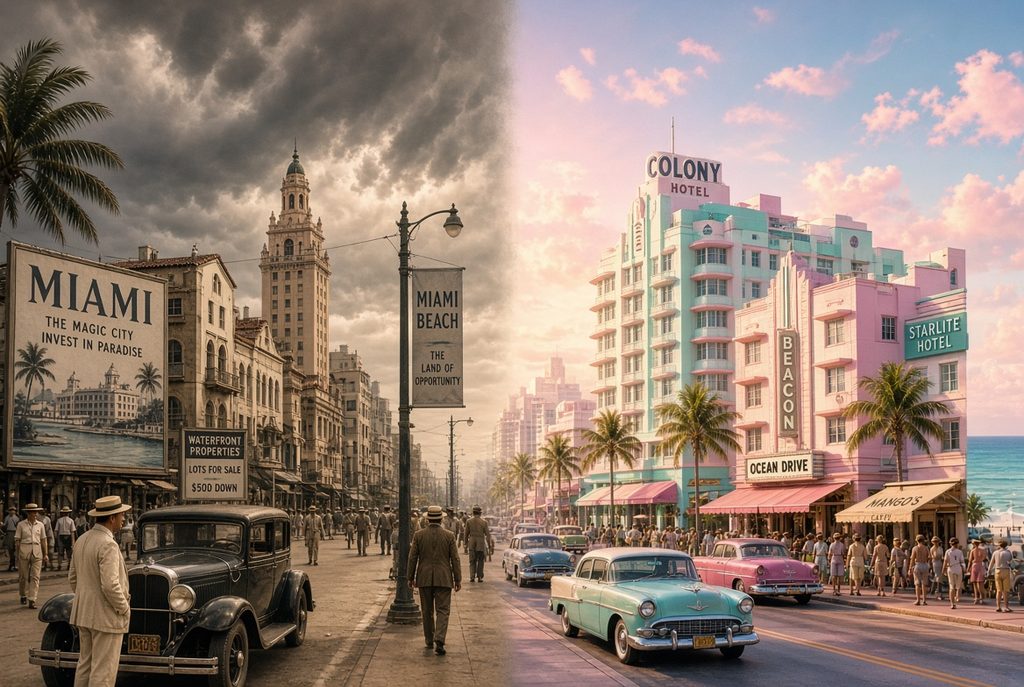
The 1920s brought a wild real-estate boom. Speculators flooded South Florida. Then, on September 18, 1926, a powerful hurricane slammed into Miami, ending the frenzy and causing massive destruction. Out of the recovery and the Great Depression came something unexpected: the largest concentration of Art Deco architecture in the world. The colorful, geometric hotels of South Beach still define Miami’s visual identity today.
1959 – Present
The Cuban Transformation
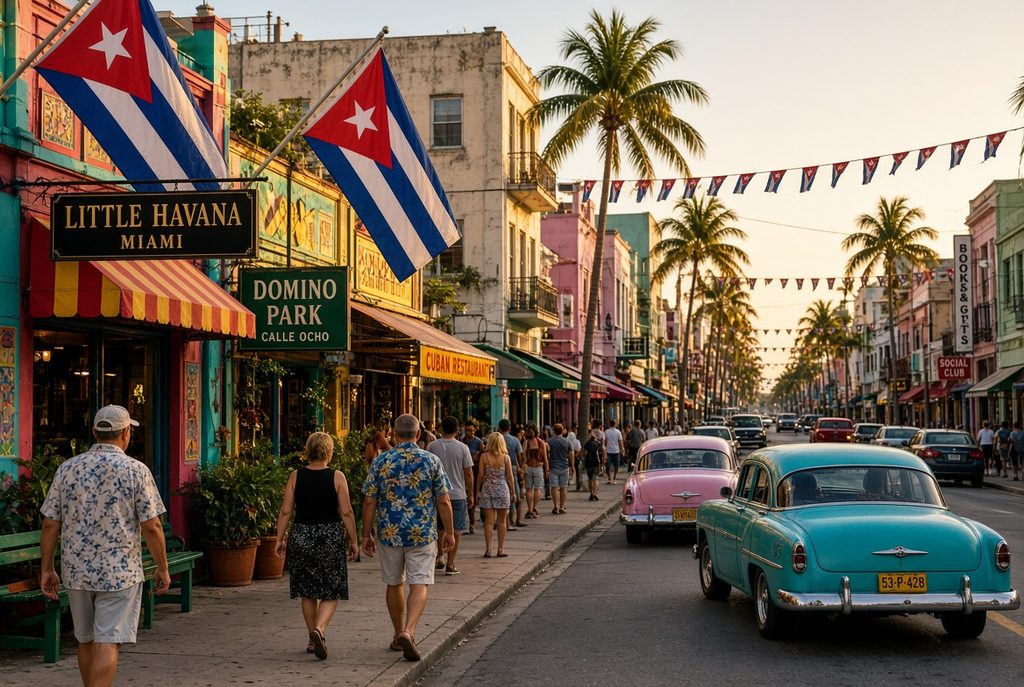
After the Cuban Revolution in 1959, waves of Cubans arrived in Miami. The 1980 Mariel Boatlift brought more than 100,000 additional refugees in a few months. Little Havana became the cultural heart of the exile community. Over time, immigrants from across Latin America followed. Today Miami is one of the most international cities in the United States — a place where Spanish is as common as English and where Latin American capital, culture, and ambition shape daily life.
Today
Miami Today: Energy, Capital & Future
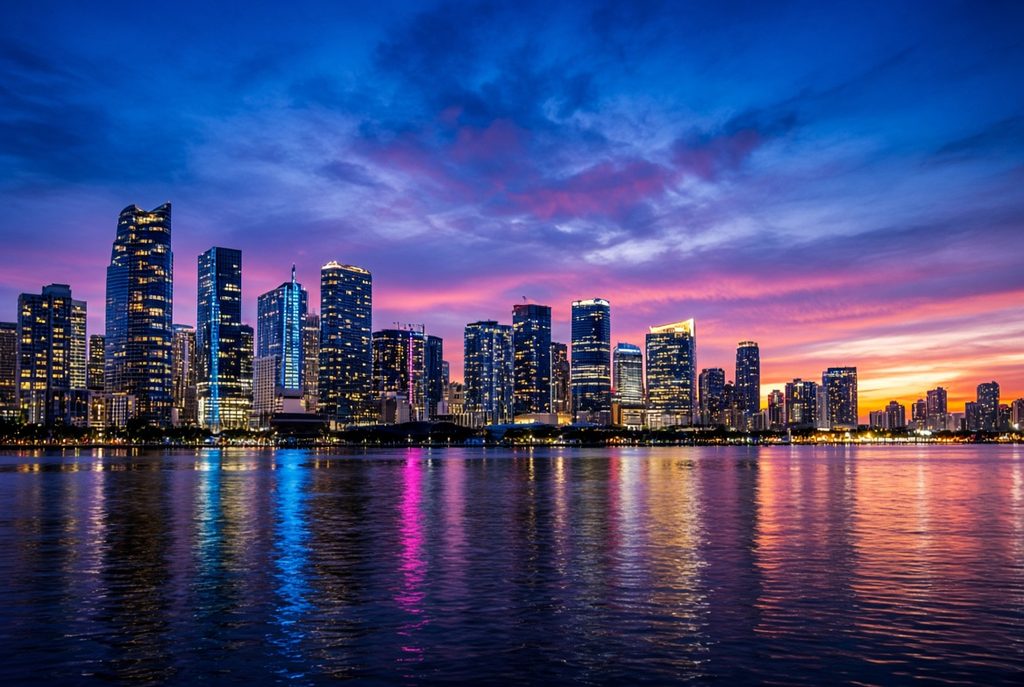
The same forces that shaped Miami’s past — bold vision, migration, reinvention, and a refusal to stay small — still define the city. From waterfront living and international finance to tech, art, and global events, Miami continues to attract people who want to build something bigger. Understanding its history helps explain why the city moves with such intensity and ambition.
Facts Most People Don’t Know
Only major U.S. city founded by a woman
Julia Tuttle remains the only woman credited with founding a major American city.
It has snowed in Miami — once
On January 19, 1977, light snow fell across parts of Miami-Dade County.
Name means “Big Water”
“Miami” comes from the indigenous word Mayaimi, referring to the great waters of the region.
Largest Art Deco collection in the world
South Beach holds more than 800 historic Art Deco buildings.
Continue Exploring Miami
From history to neighborhoods, experiences, and opportunities — the Magic City is still being written.